I apologize for not writing anything for a while. I was trying to think of things to write about after finishing reasons to believe the Bible! It dawned on me that instead of trying to come up with different topics, I could just go through the Bible slowly (very slowly). To begin with, I’ll go through John. And hopefully, this will help someone out there as they read through the Bible. John is a very deep book, and in it we discover just how high and great Jesus is. John also had a unique way of expressing things. From the very beginning of the book, John presents Jesus as much more than a mere human. Yes, he is human, but he is God at the same time. There are other themes in the book, but these will become clear to you if you read these posts. From here on out, the normal way I’ll write on this blog will sort of be like my own personal commentary. So let’s get started…
V1 – “In the beginning was the Word, and the Word was with God, and the Word was God.”
As we begin, let it be known that John 1:1-5 is one of the most eloquent opening passages in the Bible. Each verse is packed with meaning and things to be understood. So it’s fitting to start with verse 1. We first though need to ask a very important question.
Who or what is “the Word”?
If you’ve been in any church for any amount of time, you will most likely know that “the Word” is commonly understood to refer to Jesus. But how do we know this? John uses “the word” (logos in Greek) to appeal to Jewish understanding and Greek philosophical thoughts of his time. For Greek philosophers, logos referred to a principle of reason or order in the universe. Put another way, Greeks thought of logos as a type of force through which the universe runs. It’s sort of like how people talk about “mother nature” when referring to the way in which nature works. Mother nature is seen as an impersonal force that seems to make things in nature run smoothly. For the Greeks, logos was an impersonal concept. John, however, will make it very obvious that God’s concept of logos is a person…not a force or principle!
If John’s reader was Jewish, then he/she would understand logos in a different way. Remember that Jews at this time period read the Greek translation of the Old Testament called the Septuagint. For Jews, the word of God was the way in which God communicates himself to us. It is also by his word that God created everything and put into place everything that is (see Genesis 1). John is giving life and personhood to the “word” of God!
Now we can say several things about the Word…
1.The Word was there in the beginning
The first part of this verse should remind us of Genesis 1:1 (In the beginning God…). Instead of saying God was in the beginning, he replaces God with “the Word”. When nothing of our world yet existed, the Word was there. God was there and the Word was there. Without even considering the last phrase of verse 1, it should be understood that the Word and God are interchangeable. And if we understand the Word to be Jesus (which John will explain later in the chapter), then the correlation is made that Jesus was around before we began. This alone sets him apart from us. He is like us, but he’s also not like us.
2. The Word was God
I’m skipping the middle part of the verse for now. I already said that the Word and God are interchangeable. The last phrase of the verse delineates this. The Word IS God! Jesus IS God! This is what makes Christianity unique. To us, Jesus is not a mere person. He IS God! I hope you understand the immensity of that statement. For Muslims, Jesus is a prophet. For Mormons, Jesus was exalted to godhood but is completely different from the Father. For Jehovah’s Witnesses, Jesus is not God but is yet God’s son. For true believers, though, Jesus IS God! So all the attributes that one ascribes to God can be ascribed to Jesus.
3. The Word was with God
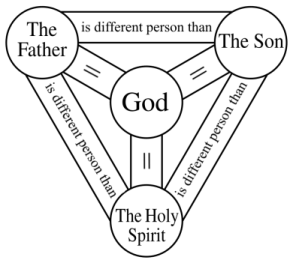
I skipped this because this can seem to contradict the last part of the verse at first glance. I just wrote that Jesus was there in the beginning. I also said that God and the Word are interchangeable. Jesus is God. Yet, John 1:1 says that Jesus was WITH God. So somehow Jesus IS God but was also WITH God? How is that possible? With humans, you cannot say, “John is John and John is with John.” This is why the early Church came to understand that God exists as a Trinity. I will not list verses here, but there are many places where Jesus is clearly equated with God, the Father of the Old Testament is equated with God, and the Holy Spirit is equated with God. There can be no other explanation of God’s nature besides the Trinity. Somehow Jesus is God and yet was with God. This verse alone destroys all the trinitarian heresies (a heresy is a belief that excludes you from salvation) that have been invented through the ages. Let’s consider just two of them…
- Arianism
Arianism was popularized by a man named Arius back in the 200’s-300’s AD. He essentially taught that Jesus was created. If Jesus was created, then we can’t say that Jesus IS God. When God creates something, there is always a distinction made between the creator and creation. Jesus would have to be something other than God. However, the verse clearly says that Jesus is God. There’s no way around this.
- Sabellianism
Sabellianism is a lesser known heresy that was invented by a man named Sabellius in the 200’s AD. Sabellianism is also sometimes called modalism. This view states that God acts in 3 ways or modes. He acted as Father in the past, he then acted as Jesus for a time, and now acts as the Holy Spirit. The best illustration of this that has been given is comparing God to an actor who plays 3 different parts in a play. You can see this in movies like The Parent Trap or The Nutty Professor. In the Nutty Professor, Eddie Murphy plays several characters. He dresses up as the professor, his mother, grandfather and grandmother. Eddie Murphy is the actor, and he’s merely acting in different ways. Sabellianism denies the coexistence of three persons in the Trinity. However, John 1:1 says that Jesus was WITH God. There is a distinction of persons within God! God can’t be one person if Jesus is God and yet was with God!
The correct way to understand the Trinity is that God is one being, or one essence, that exists in three persons. Each person of the Trinity is God. The Father is God, Jesus is God, and the Holy Spirit is God. However, Jesus is not the Father, Jesus is not the Holy Spirit, and the Holy Spirit is not the Father. This took quite a long time in church history to express clearly. It is not easy to understand, but then again, it’s God we’re talking about.
V2 – “He was in the beginning with God.”
Verse 2 is a repeat of the middle phrase verse 1 (the Word was with God). However, “the Word” is replaced with “he” (houtos). Houtos in Greek can sometimes be translated as “this one”, but the context of the following verses makes “he” a better translation. So if a Greek reader was thinking of “the Word” as an impersonal force, John makes the Word personal. The Word is a person. The Word is the person John is writing about. The Word is Jesus.
So why does this matter?
I’ll stop with only 2 verses, but if you believe that Jesus is God then that changes everything. It means he was more than a smart man, or a prophet, or a nice guy who lived a long time ago. Jesus was the next step in God revealing his nature, his triune nature. It is in Jesus that we receive forgiveness of sins. It is in him that we are given life. It is because of God’s triune nature that God the Father was able to transfer our sins upon God the Son. Sabellianism threatens this transfer of sin for our freedom. Arianism (also Jehovah’s Witnesses and Mormons) threatens the atonement in that Jesus just becomes a regular guy who dies on a cross and couldn’t really accomplish anything. Jesus had to be God to never sin. If Jesus were anything less than God, then the cross doesn’t mean a thing. Maybe in another post I’ll go deep into the Trinity, but let it be enough for now with John 1:1-2 that Jesus is God, and that changes everything!


Leave a Reply