Category: Uncategorized

  • John 1:6-13

    V6-9 – A man came, one sent from God, and his name was John. He came as a witness, to testify about the Light, so that all might believe through him. He was not the Light, but he came to testify about the Light.

    Starting in verse 6, we see the first mention of John the Baptist. Verse 7 says he came to testify about Jesus. We cannot underestimate the importance of John the Baptist. Remember that his birth was foretold by the angel Gabriel in Luke 1. Matthew 3:3 says that John the Baptist was the fulfillment of Isaiah 40. Indeed, John had the unique mission of preparing the people of Israel for the arrival of Jesus. Jesus told a group of listeners in Matthew 11 that John was one of the most important prophets to have ever lived! And what is amazing about John is that he never once looked for credit in what he did. His life was completely focused upon the arrival of Jesus. John could’ve received a lot more attention than he did, but in John 3:30 we see his attitude, “He must increase, but I must decrease.” Probably not many people would willingly copy John’s statement. However, his attitude should be ours!

    In verse 7 we see the purpose of John’s work…”so that all might believe through him”. However, the purpose was not to make people believe in himself, but rather to believe in Jesus! How many people make huge efforts to get attention for themselves? How many people spend much of their life trying to make themselves great? But how many people work hard to make someone else look great? We see here that John worked hard to get people’s eyes on Jesus, not on himself. John wanted for everyone to see how great Jesus is.

    Something that comes up as a question in my mind is how to reconcile “so that all might believe through him” with other passages where it is clear that not all will be saved. The Bible also seems to teach that God chooses people to be saved. This is a concept that I’ve fought long and hard with, but I see no way around it and am done fighting it. I’ll just give a few examples to support this. In 1 Thessalonians 1:4, Paul says that we know God chose you Thessalonians because when we preached to you our message came with conviction and the Holy Spirit. In other words, we know God chose you in advance because when we came to you God was at work. In Romans 8:29 God foreknows believers. To “know” someone in the Bible oftentimes has a sense of intimacy. So God “knows” his people before the world began! You and I had nothing to do with him choosing to foreknow us. Ephesians 1:11 says that God works everything in accordance with his will. This applies to everything… even to individual salvation. Ephesians 1:4 says that God chose us (believers) in him (Jesus) before the foundation of the world. He chose us. He chose you if you’re a believer. He chose me. God ensured that there would be a group of believers. Some would like to believe that God chose merely a group of people, and that that does not extend to him choosing individuals. However, I don’t see how that can work. If I choose for the NY Knicks to win the NBA championship this year, doesn’t that imply that I chose current players like Jalen Brunson, Karl-Anthony Towns, Mikal Bridges, etc to win? If God chooses a group to be saved, then this presupposes that that group is composed of individuals who are also chosen! I don’t see how a Christian could say that God chose believers as a group but not me as an individual. The only way this could work is if I by my own will placed myself in this chosen group. However, 1 Corinthians 1:30 says that it is because of God that I am in this group in Christ! 1 Corinthians 2:14 says that a natural (unsaved) person does not and cannot understand the things of God. So how can I put myself in this group of believers if I can’t even accept the things of God? To understand the things of God, I must be changed, regenerated, by God. So again, it is God who places me in this chosen group!

    So how do we reconcile this with John preaching “so that all might believe”? I’m not sure how to best answer it, but one thought that comes to mind is that in one sense God truly does desire that all would be saved, but at the same time he doesn’t. That seems contradictory, but we humans do it all the time. Parents typically don’t enjoy disciplining their kids, but they do so anyway because they have a higher desire to improve their child’s future behavior. So one hand, we parents don’t like disciplining our kids, but one the other hand we do! We have two wills at work at the same time. I see no problem in applying this to God, and this is how the Church has historically understood God’s ways. He does desire in a sense that all to whom John preached would believe, but yet he did not choose all of John’s listeners to be saved. This answer may not be satisfactory for some, but I’m ok with not understanding everything about God.

    V9-13 – 9This was the true Light that, coming into the world, enlightens every person. 10 He was in the world, and the world came into being through Him, and yet the world did not know Him. 11 He came to His own, and His own people did not accept Him. 12 But as many as received Him, to them He gave the right to become children of God, to those who believe in His name, 13 who were born, not of blood, nor of the will of the flesh, nor of the will of a man, but of God.

    Again we return to Jesus as the Light. Jesus as the light enlightens every person. Now we need to ask what is meant by “enlighten”. I don’t think we have to make this too complicated. In English, when we say that we “shed light” on something it means we made something better understood. I think it has, more or less, the same meaning here. Jesus gave us greater understanding as to who God is. Hebrews 1:1-3 says this, “God, after He spoke long ago to the fathers in the prophets in many portions and in many ways, [a]in these last days has spoken to us [b]in His Son, whom He appointed heir of all things, through whom He also made the [c]world. [d]And He is the radiance of His glory and the exact representation of His nature, and [e]upholds all things by [f]the word of His power…” Do you see that? God spoke to us through his Son. The Son is also his radiance and the “exact representation” of his nature. When we look upon the Son, we see God. Through Jesus we come to have a clearer understanding of God. In this way, Jesus “enlightened” us.

    Verse 10 is a very sad verse. Jesus came to his own creation. John 1:3 says that Jesus is the creator. Nevertheless, his own creation did not know/understand/recognize him. How dull must we humans be to not even recognize the creator! If any verse points to our natural depravity, this has to be one of the top ones! And yet we see the same concept at work in our day. How many blessings do we receive, and yet many fail to recognize the one who blessed us? How many people look at nature and don’t conclude that someone great and powerful must have designed all of it? We have evidence of God all around us, and yet many people are too dull to acknowledge it or willfully reject such an acknowledgement!

    And verse 11 says that because we didn’t know him, we didn’t accept him. It’s very true that we tend to reject those things that we don’t understand. And by not accepting, John is saying that we killed him in a nice way. It’s not that we ostracized him or mocked him…the Romans and Jews worked together to kill the Son of God.

    Let’s go to verse 12. Verse 12 is better news. Not all rejected Jesus! The same is true in our time…not all reject him. To those who love and follow God, God adopts those persons into his family. Connecting this to verse 13, we learn that those who are adopted by God were born of him. He gave them life. It was God’s decision to give life to those who would believe. This verse highlights that the decision to believe didn’t come from ancestry or our will; rather, those who believe were born of God. In other words, you believe because you were born of God. This verse shows the supremacy of God’s will in the matter.

    And this doctrine of adoption is truly a wonderful teaching. My wife and I adopted 4 kids. When I think back on the process, our kids did absolutely nothing to be adopted. We first had the desire and plan to adopt kids. Out of that desire, we began looking for kids that needed adoption. And we were matched with the kids we would later adopt. We did all the paperwork, we flew out to Texas to meet them… we initiated everything. They did nothing. All they did was receive the benefits of our choosing them. I think this is the same for Christians. You and I did nothing to be saved. God had the desire and plan to have adopted children long before we were born. He knew we would fall into sin, but he planned to save us. Yes, I did have to exercise faith, but many of us believe that even the act of having faith was due to God’s Spirit working in us and regenerating us (see 1 Corinthians 1:30, 2:14). He brought forth in time what he had planned in eternity past! The beauty of this teaching is that God gets all the credit. It also makes me all the more thankful for what he did.

  • John 1:3-5

    V3 – “All things came into being through Him, and apart from Him not even one thing came into being that has come into being.”

    Continuing on this biblical commentary, I wrote yesterday about John equating Jesus as God. In verse 3, John gives us further insight into the triune nature of God. Verse 3 says that all things came into creation THROUGH Jesus. Nothing came into existence apart from Jesus’ act of creation. I think when we imagine the creation of the universe, we usually picture the Father creating everything. And this is because Jesus’ name isn’t mentioned in Genesis 1. The Spirit is mentioned, but not God the Son. Here, though, and in Colossians 1:16, we understand that the Father did create the world, but it was THROUGH Jesus. Colossians 1:16 says this, “For by Him all things were created, both in the heavens and on earth, visible and invisible, whether thrones, or dominions, or rulers, or authorities—all things have been created through Him and for Him.” Again we read that everything was created through Jesus.

    What is also significant is how in Genesis 1 we see different times when God “speaks” things into existence. His “Word” brings things into existence. I am making a correlation between God’s spoken “words” with “The Word”. That is, when the Father proclaims that something will be made, Jesus puts into action what the Father wills. And, Jesus puts it into action because his will is identical to the Father’s will since Jesus is God. This is, I think, how the Father and Son worked together in the act of creation.

    This verse alone should cause us to be amazed at the power and authority Jesus has. He is not some blonde-haired guy lying down in a field somewhere with animals and flowers. No, Jesus is God Almighty! He is the maker of heaven and earth! Jesus commands, and what he says comes to pass!

    V4 – “In Him was life, and the life was the Light of mankind.”

    Just as Jesus had the power to create the universe, stars billions of miles away, the organs in our bodies, and even atoms and protons and quarks, Jesus also has life in himself. But what is meant by life? Is this just referring to his ability to create more humans? I don’t think so. I think that this refers to life we find in God. In Genesis 2:17 God tells Adam that he must obey him or he will die. Adam did eventually die physically, but even more significant was his separation from God starting that day. This was a spiritual death. Our connection to God is what true life is. He is more important for us than food, water, shelter, and oxygen. Without him, we’re just walking corpses. Without a connection to God, we are meaningless, hopeless and corrupt. Ephesians 2:2 says that we were “sons of disobedience”. Ephesians 2:3 says we were “children of wrath”, meaning we deserved God’s anger toward us. If God isn’t with us, we are nothing. Jesus says in John 15:5 that apart from him we can do nothing. God is the source of all good, so without him we turn into what He is not – corruption and decay.

    So Jesus is life and this life is the light of mankind. As we go through John, we’ll see different metaphors that Jesus uses to describe himself. He is the bread of life (6:35), the good shepherd (10:11), the resurrection and the life (11:25-26), the way, truth and life (14:6), and the true vine (15:5). All of these show us how badly we need him!

    V5 – “And the Light shines in the darkness, and the darkness did not grasp it.”

    This verse has so much application in it. Jesus, the light of mankind, shines into our darkness. If darkness is the absence of light, then darkness in this context must mean when God is absent. Yes, God is omnipresent (everywhere), but we can choose to push away his light from us. And the further God distances himself, the greater that darkness becomes. By rejecting God, we embrace all sorts of evil and sin because we love darkness instead of light.

    And now notice something about the darkness. The darkness did not “grasp” the light. The word for “grasp” can be translated as “overcome” or “perceive”. In this context, any of those translations would be acceptable. If the darkness did not “overcome” the light, then this demonstrates Jesus’ power and authority. This is certainly true because if we are familiar with Jesus, then we know that humans killed him out of anger and jealousy. However, he rose from the dead just 3 days later. In this way, the light “overcame” the darkness. The world hates God, and yet God overcame our attempts at evil! If we say the darkness didn’t “perceive” or “comprehend” the light, then we can know that the world in its sin didn’t understand Jesus. This was also true. The Jews, as a whole, didn’t know what type of Messiah Jesus was going to be. The Pharisees were confounded by Jesus. They didn’t understand his answers to their questions, and they definitely didn’t understand his way of doing things. Their idea of God was a manufactured one. So when the true light came into the world, they didn’t understand his ways. And what did they do because they didn’t understand him? They killed him.

    In conclusion, the first 5 verses of John give an outstanding idea of who Jesus is. He is God himself. He is the creator. He was there in the beginning. He is life. He is light. And all that he is has overcome the darkness of the world. He was not a mere man like many claim. He was and is much more than that. Jesus, God in the flesh, came on a rescue mission, and for those of us who believe, he shined into our darkness to give us the life that is in God…life that is real life 🙂

  • A New Direction and John 1:1-2

    I apologize for not writing anything for a while. I was trying to think of things to write about after finishing reasons to believe the Bible! It dawned on me that instead of trying to come up with different topics, I could just go through the Bible slowly (very slowly). To begin with, I’ll go through John. And hopefully, this will help someone out there as they read through the Bible. John is a very deep book, and in it we discover just how high and great Jesus is. John also had a unique way of expressing things. From the very beginning of the book, John presents Jesus as much more than a mere human. Yes, he is human, but he is God at the same time. There are other themes in the book, but these will become clear to you if you read these posts. From here on out, the normal way I’ll write on this blog will sort of be like my own personal commentary. So let’s get started…

    V1 – “In the beginning was the Word, and the Word was with God, and the Word was God.”

    As we begin, let it be known that John 1:1-5 is one of the most eloquent opening passages in the Bible. Each verse is packed with meaning and things to be understood. So it’s fitting to start with verse 1. We first though need to ask a very important question.

    Who or what is “the Word”?

    If you’ve been in any church for any amount of time, you will most likely know that “the Word” is commonly understood to refer to Jesus. But how do we know this? John uses “the word” (logos in Greek) to appeal to Jewish understanding and Greek philosophical thoughts of his time. For Greek philosophers, logos referred to a principle of reason or order in the universe. Put another way, Greeks thought of logos as a type of force through which the universe runs. It’s sort of like how people talk about “mother nature” when referring to the way in which nature works. Mother nature is seen as an impersonal force that seems to make things in nature run smoothly. For the Greeks, logos was an impersonal concept. John, however, will make it very obvious that God’s concept of logos is a person…not a force or principle!

    If John’s reader was Jewish, then he/she would understand logos in a different way. Remember that Jews at this time period read the Greek translation of the Old Testament called the Septuagint. For Jews, the word of God was the way in which God communicates himself to us. It is also by his word that God created everything and put into place everything that is (see Genesis 1). John is giving life and personhood to the “word” of God!

    Now we can say several things about the Word…

    1.The Word was there in the beginning

    The first part of this verse should remind us of Genesis 1:1 (In the beginning God…). Instead of saying God was in the beginning, he replaces God with “the Word”. When nothing of our world yet existed, the Word was there. God was there and the Word was there. Without even considering the last phrase of verse 1, it should be understood that the Word and God are interchangeable. And if we understand the Word to be Jesus (which John will explain later in the chapter), then the correlation is made that Jesus was around before we began. This alone sets him apart from us. He is like us, but he’s also not like us.

    2. The Word was God

    I’m skipping the middle part of the verse for now. I already said that the Word and God are interchangeable. The last phrase of the verse delineates this. The Word IS God! Jesus IS God! This is what makes Christianity unique. To us, Jesus is not a mere person. He IS God! I hope you understand the immensity of that statement. For Muslims, Jesus is a prophet. For Mormons, Jesus was exalted to godhood but is completely different from the Father. For Jehovah’s Witnesses, Jesus is not God but is yet God’s son. For true believers, though, Jesus IS God! So all the attributes that one ascribes to God can be ascribed to Jesus.

    3. The Word was with God

    I skipped this because this can seem to contradict the last part of the verse at first glance. I just wrote that Jesus was there in the beginning. I also said that God and the Word are interchangeable. Jesus is God. Yet, John 1:1 says that Jesus was WITH God. So somehow Jesus IS God but was also WITH God? How is that possible? With humans, you cannot say, “John is John and John is with John.” This is why the early Church came to understand that God exists as a Trinity. I will not list verses here, but there are many places where Jesus is clearly equated with God, the Father of the Old Testament is equated with God, and the Holy Spirit is equated with God. There can be no other explanation of God’s nature besides the Trinity. Somehow Jesus is God and yet was with God. This verse alone destroys all the trinitarian heresies (a heresy is a belief that excludes you from salvation) that have been invented through the ages. Let’s consider just two of them…

    1. Arianism

    Arianism was popularized by a man named Arius back in the 200’s-300’s AD. He essentially taught that Jesus was created. If Jesus was created, then we can’t say that Jesus IS God. When God creates something, there is always a distinction made between the creator and creation. Jesus would have to be something other than God. However, the verse clearly says that Jesus is God. There’s no way around this.

    1. Sabellianism

    Sabellianism is a lesser known heresy that was invented by a man named Sabellius in the 200’s AD. Sabellianism is also sometimes called modalism. This view states that God acts in 3 ways or modes. He acted as Father in the past, he then acted as Jesus for a time, and now acts as the Holy Spirit. The best illustration of this that has been given is comparing God to an actor who plays 3 different parts in a play. You can see this in movies like The Parent Trap or The Nutty Professor. In the Nutty Professor, Eddie Murphy plays several characters. He dresses up as the professor, his mother, grandfather and grandmother. Eddie Murphy is the actor, and he’s merely acting in different ways. Sabellianism denies the coexistence of three persons in the Trinity. However, John 1:1 says that Jesus was WITH God. There is a distinction of persons within God! God can’t be one person if Jesus is God and yet was with God!

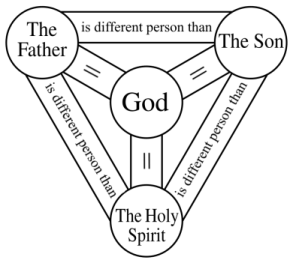
    The correct way to understand the Trinity is that God is one being, or one essence, that exists in three persons. Each person of the Trinity is God. The Father is God, Jesus is God, and the Holy Spirit is God. However, Jesus is not the Father, Jesus is not the Holy Spirit, and the Holy Spirit is not the Father.  This took quite a long time in church history to express clearly. It is not easy to understand, but then again, it’s God we’re talking about.

    V2 – “He was in the beginning with God.”

    Verse 2 is a repeat of the middle phrase verse 1 (the Word was with God). However, “the Word” is replaced with “he” (houtos). Houtos in Greek can sometimes be translated as “this one”, but the context of the following verses makes “he” a better translation. So if a Greek reader was thinking of “the Word” as an impersonal force, John makes the Word personal. The Word is a person. The Word is the person John is writing about. The Word is Jesus.

    So why does this matter?

    I’ll stop with only 2 verses, but if you believe that Jesus is God then that changes everything. It means he was more than a smart man, or a prophet, or a nice guy who lived a long time ago. Jesus was the next step in God revealing his nature, his triune nature. It is in Jesus that we receive forgiveness of sins. It is in him that we are given life. It is because of God’s triune nature that God the Father was able to transfer our sins upon God the Son. Sabellianism threatens this transfer of sin for our freedom. Arianism (also Jehovah’s Witnesses and Mormons) threatens the atonement in that Jesus just becomes a regular guy who dies on a cross and couldn’t really accomplish anything. Jesus had to be God to never sin. If Jesus were anything less than God, then the cross doesn’t mean a thing. Maybe in another post I’ll go deep into the Trinity, but let it be enough for now with John 1:1-2 that Jesus is God, and that changes everything!

  • Why to Believe the Bible – Jesus Himself Believed the Bible

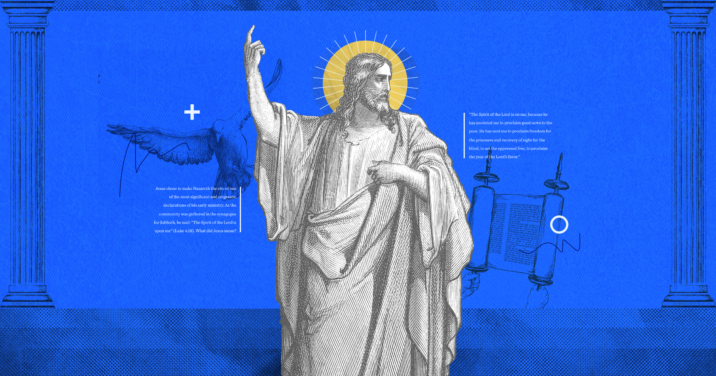
    Blog Image   Academic   Dec    The Spirit of the Lord is Upon Me @X x

    The fourth reason to believe the Bible is divine in origin is because Jesus himself believed in the authority of it. What is odd to me is that sometimes you meet a person who claims to love Jesus, and yet they pick and choose what parts of the Bible to accept or not. Jesus himself believed the entire Bible! Also, if you don’t take the Bible as a whole, why would you ever believe in Jesus’ claims since we learn of his divinity and salvation through the Bible?! If you reject certain parts of the Bible, who is to say that the parts written about Jesus are correct? What has happened is that such people pick and choose whatever parts they feel like accepting. The Word of God doesn’t work this way. It’s either all correct (inerrant) or it’s an untrustworthy book.

    So how do I know that Jesus believed the Bible? We’ll consider a few examples. Let’s start with Matthew 19:3-8.

    Some Pharisees came to him to test him. They asked, “Is it lawful for a man to divorce his wife for any and every reason?”“Haven’t you read,” he replied, “that at the beginning the Creator ‘made them male and female,’[a] and said, ‘For this reason a man will leave his father and mother and be united to his wife, and the two will become one flesh’[b]? So they are no longer two, but one flesh. Therefore what God has joined together, let no one separate.” “Why then,” they asked, “did Moses command that a man give his wife a certificate of divorce and send her away?”Jesus replied, “Moses permitted you to divorce your wives because your hearts were hard. But it was not this way from the beginning. I tell you that anyone who divorces his wife, except for sexual immorality, and marries another woman commits adultery.”

    In its context, the Pharisees question Jesus regarding divorce. Jesus answers by quoting Genesis 2:24 in verse 5 as the basis for God’s view of marriage. Basically, Jesus settled this argument with the authority of the Old Testament. He does not go to traditions, cultural ideologies, or anything else. He simply relies on the Bible. In other words, Jesus himself believed in the authoritative nature of the Old Testament.

    Let’s look at another example, Matthew 5:17-19.

    “Do not think that I have come to abolish the Law or the Prophets; I have not come to abolish them but to fulfill them. 18 For truly I tell you, until heaven and earth disappear, not the smallest letter, not the least stroke of a pen, will by any means disappear from the Law until everything is accomplished. 19 Therefore anyone who sets aside one of the least of these commands and teaches others accordingly will be called least in the kingdom of heaven, but whoever practices and teaches these commands will be called great in the kingdom of heaven.

    What is Jesus saying? He explains that the words of the Old Testament (the Word of God) are BINDING. What was written in the Old Testament WILL be accomplished! People will be held accountable for what was written. Jesus here affirms once again the abiding validity of the Word of God. He 100% agreed with the rest of Scripture.

    We’ll consider yet another passage, John 16:12-15.

    “I have much more to say to you, more than you can now bear. 13 But when he, the Spirit of truth, comes, he will guide you into all the truth. He will not speak on his own; he will speak only what he hears, and he will tell you what is yet to come. 14 He will glorify me because it is from me that he will receive what he will make known to you. 15 All that belongs to the Father is mine. That is why I said the Spirit will receive from me what he will make known to you.”

    Here, Jesus is giving authority to the future teaching of the apostles, which is what we have in the New Testament. All the books of the New Testament were either written by an apostle or someone who was very close to the apostles (like Mark and Luke). JI Packer said something useful in regard to this passage, “He had promised the twelve that the Spirit should come to teach them what in His own earthly ministry he had left unsaid, and He kept His promise; so that the apostolic teaching was in reality the complete and final version of His own.”1 Not only did Jesus recognize the authority of the Old Testament, he also recognizes what the apostles write.

    As our last example, we’ll consider Matthew 15:1-9.

    “Then Pharisees and scribes came to Jesus from Jerusalem and said, “Why do your disciples break the tradition of the elders? For they do not wash their hands when they eat.” He answered them, “And why do you break the commandment of God for the sake of your tradition? For God commanded, ‘Honor your father and your mother,’ and, ‘Whoever reviles father or mother must surely die.’ But you say, ‘If anyone tells his father or his mother, “What you would have gained from me is given to God,”[a] he need not honor his father.’ So for the sake of your tradition you have made void the word[b] of God. You hypocrites! Well did Isaiah prophesy of you, when he said:

    “‘This people honors me with their lips,
        but their heart is far from me;
    in vain do they worship me,
        teaching as doctrines the commandments of men.’”

    In this passage, Jesus rebukes the Pharisees for putting their own traditions and commands above God’s commands (the Word of God). It is very clear here that Jesus indicates that we understand that the words of the Bible come from God himself! The premise for his reasoning is that the Pharisees’ traditions are not coming from God himself, whereas the Bible is indeed from God. As can be seen from the 4 passages above, Jesus considers the Bible to be binding and authoritative. The reason for its authority is because the words come from God.

    Unfortunately, there are many today that tend to exalt words spoken specifically by Jesus over the rest of the Bible. They treat his words as though they are somehow more significant than the rest of the word of God. However, the very nature of the Word of God goes against this thought pattern. The very nature of the Bible demands that ALL the words of the Bible have equal weight and authority. As West Oneonta Baptist Church’s statement of faith says, “What the Bible says, God says.”! Yes, we have the written words of Jesus (who is God), but the other words of the Bible were just as much from God as Jesus’ words were.

    Where this trend of putting Jesus’ words above rest of the Bible is typically seen is in liberal “Christian” groups. They claim that sins such as homosexuality and abortion must not be sins since Jesus never said anything about it. This is a faulty argument because Jesus believed the rest of the Bible (which condemns homosexuality and murder), and he gave the apostles (and the apostles alone) authority to transmit God’s teachings in light of Jesus’ death and resurrection.

    The point I’m making is that since Jesus himself believed in the inspiration and authority of the Bible, and we should likewise consider the Bible to be of divine origin. If you say you believe in Jesus, then you ought to take the whole Bible seriously since he did himself!

    1 J.I. Packer, “Fundamentalism” And The Word Of God (Grand Rapids: Eerdmans, 1958), 64.

  • Why to Believe the Bible – There are Thousands of Ancient Manuscripts Still in Existence

    ancient paper scroll for writing

    Moving forward on this series of posts, the next reason to believe that the Bible has a divine source is because there are thousands of ancient manuscripts of the Old and New Testaments. Beginning with the Old Testament, I’ve seen estimates of us having anywhere from 17,000 to 30,000 ancient manuscripts. These manuscripts are either fragments or full copies of books found in the Bible. The oldest manuscripts we currently have are from the 200’s BC from the Dead Sea Scroll collection. Before the discovery of the Dead Sea Scroll collection in the 1940’s, the oldest manuscripts available dated to the 900’s AD. So you can see that the Dead Sea Scroll discovery pushed back the oldest manuscripts by about 1100 years! What is most remarkable about the discovery of these scrolls was that the content of the scrolls was no different from the next oldest manuscripts! One would expect for there to be significant differences in wording or content, but this was not the case…which is a testament to scribal techniques.

    The truth of the matter is that many scribes dedicated their lives to the faithful copying of the Old Testament, mainly because they recognized it as coming from God. Moreover, they were known for their strict rules in copying. One can look up a list of their rules online, but one to highlight was that no more than two copying mistakes were allowed in one manuscript. As soon as the scribe made three mistakes, they had to start the copying process all over again! This alone most likely accounts for the same content seen in the Dead Sea Scrolls and the next oldest manuscripts from the 900’s AD.

    As for the New Testament, we have about 6,000 copies of ancient manuscripts. The oldest ones we have are from the early 100’s AD. Just to give you an idea of how amazing it is that we have 6,000 copies of the New Testament and 17,000-30,000 of the Old Testament, the next oldest book that we have with a large number of copies is The Iliad by Homer. The Iliad was written in the 700’s BC in Greece, and currently there are about 1700 copies of it. So by comparison, in terms of number of copies, the Bible blows the next oldest book out of the water! Now, it is true that the Bible does not claim to be a story book like The Iliad, but why did Jews and early Christians see it necessary to make so many copies? I would argue that it is because they recognized its divinity!

  • Why to Believe the Bible – The Bible is a compilation of documents written over 1500 years and yet all point to the same basic message

    The first point as to why to believe that the Bible is divine is because it’s message is unique. I spent 3 posts on that because I believe that the uniqueness of the Bible is its most noteworthy feature. I’m convinced that no other religious text comes close to the Bible. The second point as to why we ought to believe the Bible as divine is a long statement! As you can see above, though, it should seem incredible to us that 66 documents, written by about 40 different authors, in 3 different languages, written over a time span of about 1500 years should all contain the same basic message! It would be understandable if the same basic message were maintained over a period of five, ten or fifteen years, for example, and all in the same language. However, the composition of the Bible took a long time by many different people in different languages. If we take the traditional view, then Genesis was written in about 1400 BC and most of the New Testament writings in 40-90 AD. I do not believe that the description of the same God, the same message, the same principles, etc is mere coincidence – I believe it was a result of divine inspiration. Imagine talking to someone today from 1500 years ago in 500 AD. Even if you both spoke English, you would most likely have very little in common and have difficulty understanding each other’s worldview or perspectives on life. Imagine, then, writing something that would need to align with something they wrote. A real example would be like writing something to complement Beowulf (written somewhere in the time frame of 700-1000 AD). No doubt that would be quite a challenge to undertake. It would have been the same for the Jews who wrote the Bible. Moses would most likely not have shared much in common with Peter or Thomas, for example. Yes, they worshiped the same God, but the culture had changed dramatically due to outside influences. What most prominently connected 1400 BC Israel to 50 AD Israel was the overarching message of the Bible. Times, cultures, and languages changed, but God did not! And because God does not change, the overall message of the Bible does not either.

    All 66 books point to the same essentials of God’s character and plan for history in differing ways. All the books describe a God who is in absolute control, kind, just, wise, all-powerful, etc. All the books describe a creation turned upside-down by humans’ sinful choices. All the books describe the journey God led his people through towards the central act in history – Jesus’ death and resurrection. I do not see how these writings could share common themes, given the circumstances, unless the writing process were superintended by God himself!

    Something else to point out regarding the Bible is that its composition employed a high degree of accountability. What do I mean? The Bible, as stated above, had about 40 different authors and involved many, many people in the preservation of the writings. The Bible was not written in a dark back room somewhere by a single person! The Bible is not like the book of Mormon, for example, where Joseph Smith claimed that he alone could translate golden plates given to him by an angel. The Bible is not like the Quran where Muhammad alone got a message from Gabriel. The composing of the Bible involved hundreds, if not thousands, of people. I will write about Jewish scribes and their role in the Bible in the following post. Moreover, many, many people were involved and had a part in recognizing which ancient writings came from God…and which did not. Many people ask why the Book of Enoch, the Gospel of Thomas, the Shepherd of Hermas, etc were not included. If books were excluded from the Bible, it was because those involved in its formation had reason to doubt authorship or its message. The point is that those who participated in the formation of the “canon” were intensely concerned about which books to include or not. The process was not an overnight one, nor should it have been. If we’re going to base our lives off of certain writings and recognizing which books have their source in God, we ought to be extremely careful in the process!

    With all that being said, it seems to me that the the fact that there is the same basic message that is shared by all the writings of the Bible points to a divine origin!

  • Why to Believe the Bible – The Bible Has a Unique Message (pt 3)

    3. No other major religion has a central figure that is resurrected

    We’re still on this series of blog posts concerning why to believe the Bible, and on the particular point that the Bible’s message is unique. The third and final point demonstrating the uniqueness of the Bible’s message is that no other major religion has a central figure that is resurrected. There are two things to address inunderstandingwhy this is so important.

    1)How can we know if Jesus of Nazareth was really resurrected?

    2)What does it matter if he was resurrected?

    For the first point, the claim for a resurrection would be crazy if there were no eyewitnesses. However, the apostle Paul in 1 Corinthians 15:3-6 states that Jesus appeared to over 500 people after his resurrection. He stated that fact in the context of a false teaching that was being spread at the church in Corinth – that there will be no resurrection. To counter this, he pulls out this fact that many people saw Jesus after coming back to life. That is the most compelling argument for knowing if Jesus was truly resurrected. In any argument, eyewitnesses always help the credibility of an argument.

     Secondly, the fact that at least some of the original twelve disciples died for their claims concerning Jesus also gives credibility to his resurrection. Traditionally, it is believed that eleven of the original twelve disciples died for this belief. However, others doubt that as many as eleven died. One author, Sean McDowell, believes that five of them were likely to have been killed, with the rest not so likely1. Another one, Edward Gibbon, claims that only three of them were killed2. As far as I’m concerned, even if only one of them died for the faith, it still shows that even that singular person was willing to risk their life on a claim of the resurrection. You would have to be not quite right in the head to die for something you know to be a lie! Along these same lines, consider the apostle Paul. He states in his own words that he persecuted Christians. What else would change him so radically except for the resurrected Jesus?!

    Thirdly, most of the disciples doubted at first that Jesus had risen from the dead. If someone is looking to start a movement, then it doesn’t seem like a good idea to include that the central figure’s own followers doubted his resurrection!

    There are other reasons for believing that the resurrection occurred, but those three seem to me the most noteworthy reasons. Of course, one can always doubt the resurrection no matter what reasons one gives. One can always adopt the attitude, “I wasn’t there, so I won’t believe.”, or “There isn’t absolute proof for this supposed resurrection.” This would be the same as doubting, for example, that the Civil War took place in the 1860’s or that Alexander the Great was the ruler of an empire simply because “I wasn’t there” or “there aren’t any videos to prove the occurrence of these events”. People generally don’t doubt that those events took place (even without videos or personal conversations with eyewitnesses), yet we doubt and demand more proof for Jesus’ resurrection. Who knows…maybe the documents from the Civil War are fakes? Maybe ancient historians made up everything we know about Alexander the Great. With that in mind, Jesus was correct in saying, “Blessed are those who believe without seeing.”

    For the next point (why does a resurrection matter), the resurrection is what validates the Christian faith! As was explained in previous posts, sin (and its result – death) is our biggest problem. It pits us against one another and God. Without Jesus’ resurrection, our sin problem remains (1 Corinthians 15:17). As such, Christianity is the only religion that actually provides a valid solution for the problems of sin and death! Again referring to past posts, we see an ignoring of transgressions in other religions. In Islam, Allah merely forgives sins without demanding justice. In Hinduism and Buddhism, one gets many chances to try and make up for one’s wrongdoings. In Christianity, we recognize that the God of the Bible is much too “other” and perfect for us to attempt to please him with our own efforts. In other words, God is too perfect for us, but he’s also just. He has a lot of patience, but he eventually demands justice for all wrongdoings. He cannot simply let sins slip by unnoticed. At the same time, though, God is described as loving and merciful. In his immense love for us, he sent Jesus his son to take our punishment for us. In Jesus, therefore, we see the meeting of justice and mercy. No other religion provides such a solution for our problem of sin and death!

    The resurrection, then, validates Jesus’ claims to divinity. He predicted his death and resurrection in Matthew 17:22-23, among other passages. In John 11:25 Jesus states that he IS the resurrection and the life, meaning he is the source of both. To be able to rise again points to the fact that Jesus is indeed divine. He is God himself (John 8:58, Titus 3:4, etc), and that changes everything! Only God can overcome the curse of death he placed on humanity in Genesis 3:19. As such, this means that all of Jesus’ teachings and other claims must be true if he is God himself. This means that our sin is forgiven in him. This means that we have peace with the Father through him. This means that he is the way, the truth and the life. The death and resurrection of Jesus are the central acts of all history because they opened a door for us to be able to commune with the Father.

    No other religion has a central figure that is resurrected. Muhammad, Buddha, Guru Nanak (founder of Sikhism), Joseph Smith, etc all died and their bones remain there. Jesus is the only religious leader who died and then came back to life. As such, the claims of Christianity are unique in this aspect. These claims are all found in the Bible, which again, means that the Bible is unique and should be considered as divine in its origin.

    In conclusion to this first overarching point concerning the fact that the Bible’s message is unique and this therefore supports its divine origin, I truly believe that the Bible describes our condition and the nature of God most accurately out of any religious textbook. It’s pages are filled with human failings (sin), but it’s also filled with God’s mercy and grace extended to us time and time again. On the cross, we see this unique meeting of justice, mercy, grace, and love, which is then validated in the resurrection. The perfect one takes the place of the imperfect multitude, and yet through God’s power he overcomes the original curse placed on Adam. This truly is good news, and no other religious book has a message that quite compares!

    1 McDowell, Sean. n.d. The Fate of the Apostles: Examining the Martyrdom Accounts of the Closest Followers of Jesus. 2nd ed. London and New York: Taylor and Francis Group.

    2 Gibbon, Edward. n.d. The History of the Decline and Fall of the Roman Empire. Vol. 2. New York: J&J Harper.

  • Why to Believe the Bible – The Bible Has a Unique Message (pt 2)

    2. No other major religion has a similar view of their god’s relationship to humans

    So we’re continuing on the first point of why we should believe the Bible has a divine origin. The first major point is that the message of the Bible is unique. The last post discusses how Christianity’s view of salvation is different from every other religion. Now, I will argue that the Bible’s view of humans in relation to God is unlike that of any other religion.

    I will start out by saying other religions flatten out the differences between their deity/ies and humans. We see this primarily in how other religions view the path to a paradise or positive afterlife. In any religion based on good and bad works, the contrast in status between god(s) and humans is diminished. In Christianity, one single sin committed by Adam condemned the entire human race and subjects us to a deserved, everlasting punishment (Romans 5:12-19)!

    • As a side note, some have questioned why we deserve everlasting punishment for finite, temporal sins? The answer lies in the magnitude of God. I have given to people an example from real life to illustrate this. Someone who commits a crime against an ordinary person will receive some sort of punishment. If someone commits the same crime against a mayor, governor, or president, the sentence for the crime is usually heavier. Why? Because the victim of the crime has an elevated status or authority. Therefore, the victim of the crime partly determines the severity of the judgment. If we could receive the death penalty for crimes committed against a human authority, how much worse is it, then, if we commit a crime against the Creator?! I would argue that all sins are essentially infinitely evil because they are committed against an infinite being.

    Back to the main point, though…I was explaining that other major religions flatten out the contrast between their deity/ies and humans. In Christianity, sins are understood as serious offenses and justly deserve punishment because God himself is just. Other religions will also say that their deity is just, but I do not agree. Why? Take Islam for example. As I understand it, Allah weighs out one’s good works against one’s bad works. If you did more good in life than bad, then Allah decides to mercifully forgive one’s sins. However, where is the justice in that? Where is the justice that should be required for wrongdoing? If a human judge were to simply pardon a heinous crime without any regard to justice, there would (and should) be outrage. In essence, what we see here is a diminishing of a deity’s characteristics and the seriousness of sin, and therefore an exaltation of the status of humans in that they can please Allah on their own.

    Another example can be seen in typical American views, at least in my experience. A typical American will say that most everyone goes to heaven to be with god (I put a lower-case “g” because I do not believe that this is the same God as that shown in the Bible). This also is a works-based righteousness in that the person who believes this thinks that they are “good enough” to go to heaven. However, as was the case for Islam, where is the justice for wrongdoings? This type of view diminishes the severity of our offenses. In this typical American view, there is no payment for wrongs done…this god simply forgives out of kindness or our sins weren’t that bad to begin with in this god’s eyes. This type of god is not just, though.

    I can give other examples, but I believe those two examples above make the point that all religions that base salvation on works flatten out the differences between their god(s) and humans. In Christianity, there is no working up to salvation. There is no concept of doing enough good works to gain access to God’s presence. This means that the Bible magnifies the gap between the sinful human and God. Ephesians 2:1-3 says that humans in their natural state are spiritually dead in sins. To make it worse, it says that we naturally follow the devil and deserve God’s anger! Romans 5:10 says that all who live in sin are God’s enemies. Putting these two passages together, on our own we are God’s enemies and entirely without him! How could it get any worse for us??? Given the hopelessness of such a situation, how could anyone possibly please God if their whole life was spent as an enemy of him?

    So on the one hand, the Bible describes a vast gap between God and humans. This gap is not seen to the same extent in other religions. On the other hand, the same Bible goes on to describe that God sent a mediator to resolve our distance from him by taking the punishment we deserve. This mediator is Jesus of Nazareth. I will write more on Jesus in the next post. As a result of this mediator’s work, God’s justice is satisfied since there is a payment for wrongdoing. Also, though, the new believer is put into a completely different type of relationship with God. The exalted state of a believer cannot be ignored and provides the counterpoint to our condition under sin. We see in God a terrible severity towards those who hate him (everyone who rejects him), but a wonderful and pleasant goodness towards those who accept his demand for justice and trust in Jesus’ work as necessary to salvation (Romans 11:22).

    The person who once was an enemy of God, but now believes, is now so close to God that they are called God’s child (Romans 8:15). They also learn that God had planned way back in eternity good things for them (Ephesians 1:4-11). In the next life, the Bible tells us that we will be with God with unlimited access (Revelation 21:3). We are beloved by God. There is a closeness to God, yet still a Creator-creature distinction, described in the Bible that is not found in other religions. Consider Islam again. Some teach that faithful Muslims will be able to see Allah once a week in Jannah (paradise). “Elite” believers will be able to see Allah twice a day1. So even in the next life, there is still distance between the Muslim and Allah. Consider Hinduism, Jainism and Buddhism. All three share the idea of nirvana or moksha, whereby an individual eventually unites with the supreme god Brahman. Some within these three religions blur the line between Creator and creature by affirming that the soul and Brahman are basically the same2. In Christianity, we maintain that there will always be a difference between the believer and God, but the relationship between the two will be incredibly close.

    No other religion emphasizes such a stark contrast between the state of an individual before and after belief like Christianity. By extension, the relationship between God and humans is much different than perspectives from other religion. The reason for this contrast is rooted in one’s relationship to God. To summarize what has been said, no one naturally wants God. As such, we incur God’s wrath for our disobedience to him. However, God in his kindness works in us and because of his grace we come to him through a mediator named Jesus. God converts his enemy into his child and friend completely by grace. So yes, once again the Bible communicates something unique. This gives me reason to see the Bible as having divine origins.

    Sources:

    1 Seeing Allah by the People of Paradise. 2024. Darulfatwa. June 28, 2024. https://www.darulfatwa.org.au/en/seeing-of-allah-by-the-people-of-paradise/.

    2 Woodburne, AS. 1925. Review of The Idea of God in HinduismThe Journal of Religion 5, no. 1 (January): 52–66. https://www.jstor.org/stable/1195422?seq=15.

  • Why to Believe the Bible – The Bible Has a Unique Message (pt1)

    While the other reasons that we’ll go through are convincing concerning why the Bible is divine and therefore should be believed, I personally think that what most persuades me towards Christianity (in a rational sense) is the Bible’s unique message. I believe that because of its uniqueness, the Bible has divine origins.There are several ways in which it is unique.

    1. No other major religion teaches the Bible’s unique way to salvation in order to enter a type of paradise
    2. No other major religion has a similar view of their god’s relationship to humans
    3. No other major religion has a central figure that is resurrected

    For this post, because I value so much the uniqueness of the Bible I will only address the first point. The other two points will be in following posts.

    1.No other major religion teaches the Bible’s unique way to salvation in order to enter a type of paradise

    Many major religions (Islam, Judaism, Hinduism, Biddhism, etc) describe some sort of a path to a blissful afterlife, Others like Shintoism, Sikhism, and the Baha’i faith don’t exactly define the nature of an afterlife as strictly as other beliefs. Nevertheless, none of them quite match Christianity’s perspective as to WHY we need a positive afterlife and HOW to get there. In Christianity, we desperately need and want a positive afterlife because we need saving FROM something and to be connected TO something. To sum up what I will write…we believe we need saving FROM sin and to be connected TO God. The point of a blissful afterlife, then, is to enjoy God forever! Being with God is the best type of existence we can have! No other religion has quite that same view. These other beliefs agree that humans need to be connected to something higher than ourselves, whether that be to a god of some sort or to a transcendental existence, but none of them view the path to HOW we are connected to this higher being or higher form of existence in the same way Christians do.

    The basic message of the Bible is that we humans have messed up badly in disobeying God (Romans 3:9), yet this same God whom we have offended ends up voluntarily saving us (Romans 3:22, 5:6-8, etc)! The God of the Bible is so infinitely perfect and so infinitely holy that even one act of disobedience earns our separation from him (Romans 6:23, Isaiah 59:2). In fact, we have messed up so badly that all of us are born into sin, something called original sin (there is debate over whether this means if we inherit only a sin nature or also guilt from the first sin committed by Adam, but I will not address that debate in this post). So what is unique to Christianity is that we need a positive afterlife primarily because we need to be connected to God and rescued from our own sinfulness. Being with God is the best place to be!

    On the nature of this sin in us, the effect of it is utterly devastating. Other religions tend to diminish our inherent corruption (I’ll explain this in the next post). Cornelius Plantinga has a book that describes the nature of sin. As he puts it, “…sin is the longest-running human emergency”. In another part he writes,

    “Annoyances, regrets, and miseries trouble us in all the old familiar ways. But none of these troubles matter as much as sin. The reason is that sin distorts our character, a central feature of our very humanity. Sin corrupts powerful human capacities – thoughts, emotion, speech and acts – so that they become centers of attack on others or of defection or neglect.”1

    To add my own words, sin distorts and contaminates the core of who we are. Sin’s effects are so powerful that every part of us screams in opposition to God. We do not want to be told what to do or how to think. Consider Romans 8:5-8, which says that those who live in the flesh (i.e. those who do not have God in their lives) CANNOT submit to or please God. Consider also 1 Corinthians 2:14, “The natural person does not accept the things of the Spirit of God, for they are folly to him, and he is not able to understand them because they are spiritually discerned.” In other words, no one understands God naturally, and therefore they do not come to him naturally. This message is not seen in other religions!

    To continue on the unique nature of Christian salvation, God doesn’t leave us in our natural state! In his love for humanity, he sends Jesus who is God in the flesh to take our punishment and thereby satisfy God’s demand for justice (Romans 5:8, Hebrews 1:3, Romans 3:25-26)! Not only that, he continues to show his love in that he regenerates us (John 1:13, 3:5-8), makes us to be in right standing with him (Galatians 2:16), and will one day give us a glorified, resurrected body (1 Corinthians 15:42-49). All that he asks of us is to trust in HIS work, which involves turning away (repentance) from things that displease him. The result of this saving trust is evidenced by good deeds and things pleasing to God (James 2:14-18).

    My point in all this is that our salvation is done by God from beginning to end! No one can brag about their innate abilities to somehow match God’s perfect standards for their life. To match God’s standards, we can ONLY rely on Jesus’ fulfillment of those standards!

    All other religions more or less base their view of achieving a blissful afterlife on human works and achievements. Consider the following major religions:

    A. Islam – Allah weighs one’s good and bad works. Those whose good works outweigh their bad works will go to paradise

    B. Hinduism – One has to do good works in order to achieve a better, next life once one is reincarnated (comes back to life in a different form)

    C. Orthodox Judaism – One has to obey God’s laws in the Old Testament

    D. Buddhism – Similar to Hinduism

    E. Sikhism – Upon death, one’s essence gets absorbed into the cosmos

    F. Baha’i – One’s soul passes through the spirit world in an “eternal journey towards perfection”2

    G. Typical American beliefs – Everyone who is “good” goes to heaven. Really “bad” people may go to a place of torment. One other thing I’ve typically heard besides the “good” person paradigm is that we might become a form of energy, and some others may believe in some form of reincarnation.

    I could spend many pages describing and investigating each religion’s view of an afterlife (which I might do in the future?), but I believe I’ve summarized enough to get the point across that other religions don’t have a view of the need for and the path to salvation like that of Christianity. No other religion has a person take their place in punishment in order to have access to a place of paradise.

    The description of how to be saved and the need for salvation in the Bible is truly matchless in light of other religions. I cannot save myself…only God can save me!

    In the next post, we’ll look at point number two (see above), that no other religion has such a contrasting view between a god(s) and humans. I touched upon this in this post, but I tried to emphasize the bigger picture of salvation here.

    Sources:

    1. Plantinga, Cornelius. 1995. Not the Way It’s Supposed to Be: A Breviary of Sin. Grand Rapids, Mich. Eerdsman Publishing Co.
    2. Life and Death. 2025. The Baha’i Faith. Baha’i International Community. 2025. https://www.bahai.org/beliefs/life-spirit/human-soul/life-death.

  • Why to believe the Bible – Why does this matter?

    As a first post, I believe the most essential topic to begin with is why to believe the Bible. The main thrust behind why to believe the Bible is the belief that it has its source ultimately in God. Yes, the books and letters of the Bible were written with human hands, but I believe (along with millions of other Christians in the past and present) that the process was superintended by and inspired by God himself.

    I have recently been contemplating the immense importance of our understanding of the nature of the Bible. Previous to the past few months, I simply took for granted concepts like sola scriptura (that the Bible is our final authority in life and the Church), the canon of the Bible, and other such topics. But in today’s world, it is vital to know why we believe the Bible is from God. I believe there are two main reasons why we need to know if this book is divine in origin:

    1. We need to know if the serious claims the Bible makes are worth listening to

    If you have ever read the Bible, you know that it makes very serious, life-altering claims. For example, in Matthew 25:31-46 it talks about Jesus welcoming people into the kingdom of God and rejecting others when he comes back. Those he rejects go into an everlasting fire. 2 Thessalonians 1:7-10 speaks of a similar situation. Jesus will come back, and those who have rejected him will be punished and suffer destruction, while those faithful to him will be rewarded. Acts 4:12 says that we can only be saved through Jesus. Even if we only consider these three passages, one can easily see the gravity of the texts at hand. If the Bible is true, then that means what I do now affects how I will spend the afterlife. I need to be able to answer questions such as, “Is it true that Jesus will come back?”, “Is it true that if I reject him now that I will suffer later?”, and “Is it true that there is no other way outside of Jesus of entering into a pleasant afterlife?” We need reasons to know if the Bible is truly from God. If it is indeed from God, then that means I ought to listen and pay careful attention to its teachings.

    2. There have been ongoing attacks against the Bible’s authority

    Attacks against the Bible are not new to our generation. Since the age of the Enlightenment in the 1600’s, people such as Rene Descartes, David Hume, Immanuel Kant, Friedrich Schleiermacher, and scholars on up to the present have attempted to undermine the more spectacular claims of the Bible and emphasize rationalism and the individual over traditional understandings of the Bible. As of 2024, the Barna Group found that about 36% of American adults view the Bible as without error. Only 44% of self-identifying Christians view the Bible as without error (https://www.barna.com/trends/bible-reading-trends/). What this essentially means is that 64% of American adults either view the Bible as partially correct or completely incorrect. If the Bible isn’t guiding our morals, decisions, family relationships, etc, then something else is. I will give reasons for believing why the Bible is divine and therefore should be the supreme authority in our lives and churches.

    After this post, I will go through eight reasons for believing that the Bible has divine origins. Some points will be less convincing than others, and at the end of the day it truly is a matter of faith. Who or what you trust in most determines what you believe. If you trust your mind and your ability to think above all else, then what you think is authoritative. If you trust in scientists, then the newest theories and discoveries will hold most weight. If you trust in some Hindu goddess, then what she says goes above all else. If you trust in God as presented in the Bible then what he says in his word goes above all else. I can give you 100 reasons to believe the Bible, and even so some individuals will not trust the Bible…they will trust in something else instead. But my hope is that you will find the following posts convincing 🙂