Month: January 2026

  • Why to Believe the Bible – The Bible is a compilation of documents written over 1500 years and yet all point to the same basic message

    The first point as to why to believe that the Bible is divine is because it’s message is unique. I spent 3 posts on that because I believe that the uniqueness of the Bible is its most noteworthy feature. I’m convinced that no other religious text comes close to the Bible. The second point as to why we ought to believe the Bible as divine is a long statement! As you can see above, though, it should seem incredible to us that 66 documents, written by about 40 different authors, in 3 different languages, written over a time span of about 1500 years should all contain the same basic message! It would be understandable if the same basic message were maintained over a period of five, ten or fifteen years, for example, and all in the same language. However, the composition of the Bible took a long time by many different people in different languages. If we take the traditional view, then Genesis was written in about 1400 BC and most of the New Testament writings in 40-90 AD. I do not believe that the description of the same God, the same message, the same principles, etc is mere coincidence – I believe it was a result of divine inspiration. Imagine talking to someone today from 1500 years ago in 500 AD. Even if you both spoke English, you would most likely have very little in common and have difficulty understanding each other’s worldview or perspectives on life. Imagine, then, writing something that would need to align with something they wrote. A real example would be like writing something to complement Beowulf (written somewhere in the time frame of 700-1000 AD). No doubt that would be quite a challenge to undertake. It would have been the same for the Jews who wrote the Bible. Moses would most likely not have shared much in common with Peter or Thomas, for example. Yes, they worshiped the same God, but the culture had changed dramatically due to outside influences. What most prominently connected 1400 BC Israel to 50 AD Israel was the overarching message of the Bible. Times, cultures, and languages changed, but God did not! And because God does not change, the overall message of the Bible does not either.

    All 66 books point to the same essentials of God’s character and plan for history in differing ways. All the books describe a God who is in absolute control, kind, just, wise, all-powerful, etc. All the books describe a creation turned upside-down by humans’ sinful choices. All the books describe the journey God led his people through towards the central act in history – Jesus’ death and resurrection. I do not see how these writings could share common themes, given the circumstances, unless the writing process were superintended by God himself!

    Something else to point out regarding the Bible is that its composition employed a high degree of accountability. What do I mean? The Bible, as stated above, had about 40 different authors and involved many, many people in the preservation of the writings. The Bible was not written in a dark back room somewhere by a single person! The Bible is not like the book of Mormon, for example, where Joseph Smith claimed that he alone could translate golden plates given to him by an angel. The Bible is not like the Quran where Muhammad alone got a message from Gabriel. The composing of the Bible involved hundreds, if not thousands, of people. I will write about Jewish scribes and their role in the Bible in the following post. Moreover, many, many people were involved and had a part in recognizing which ancient writings came from God…and which did not. Many people ask why the Book of Enoch, the Gospel of Thomas, the Shepherd of Hermas, etc were not included. If books were excluded from the Bible, it was because those involved in its formation had reason to doubt authorship or its message. The point is that those who participated in the formation of the “canon” were intensely concerned about which books to include or not. The process was not an overnight one, nor should it have been. If we’re going to base our lives off of certain writings and recognizing which books have their source in God, we ought to be extremely careful in the process!

    With all that being said, it seems to me that the the fact that there is the same basic message that is shared by all the writings of the Bible points to a divine origin!

  • Why to Believe the Bible – The Bible Has a Unique Message (pt 3)

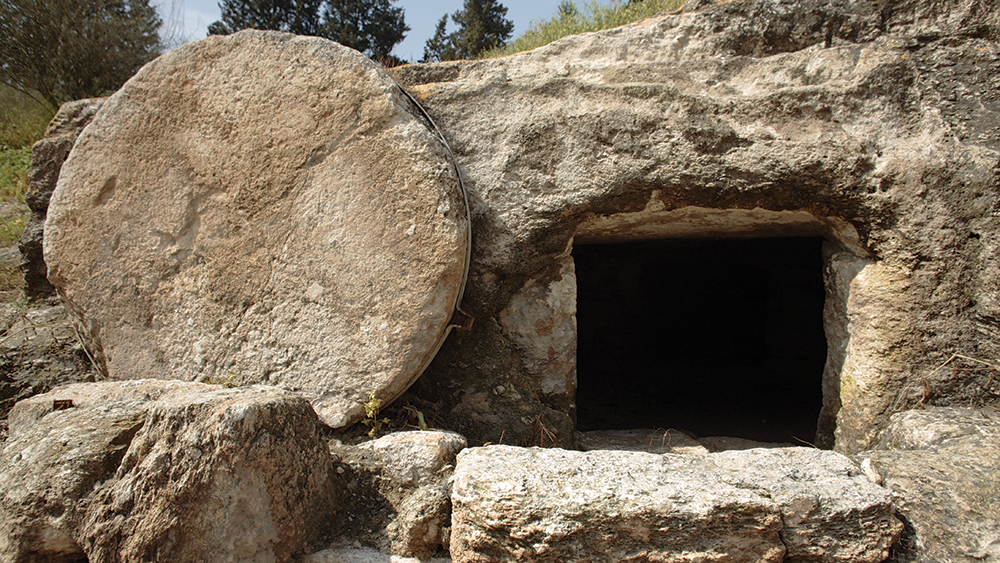
    3. No other major religion has a central figure that is resurrected

    We’re still on this series of blog posts concerning why to believe the Bible, and on the particular point that the Bible’s message is unique. The third and final point demonstrating the uniqueness of the Bible’s message is that no other major religion has a central figure that is resurrected. There are two things to address inunderstandingwhy this is so important.

    1)How can we know if Jesus of Nazareth was really resurrected?

    2)What does it matter if he was resurrected?

    For the first point, the claim for a resurrection would be crazy if there were no eyewitnesses. However, the apostle Paul in 1 Corinthians 15:3-6 states that Jesus appeared to over 500 people after his resurrection. He stated that fact in the context of a false teaching that was being spread at the church in Corinth – that there will be no resurrection. To counter this, he pulls out this fact that many people saw Jesus after coming back to life. That is the most compelling argument for knowing if Jesus was truly resurrected. In any argument, eyewitnesses always help the credibility of an argument.

     Secondly, the fact that at least some of the original twelve disciples died for their claims concerning Jesus also gives credibility to his resurrection. Traditionally, it is believed that eleven of the original twelve disciples died for this belief. However, others doubt that as many as eleven died. One author, Sean McDowell, believes that five of them were likely to have been killed, with the rest not so likely1. Another one, Edward Gibbon, claims that only three of them were killed2. As far as I’m concerned, even if only one of them died for the faith, it still shows that even that singular person was willing to risk their life on a claim of the resurrection. You would have to be not quite right in the head to die for something you know to be a lie! Along these same lines, consider the apostle Paul. He states in his own words that he persecuted Christians. What else would change him so radically except for the resurrected Jesus?!

    Thirdly, most of the disciples doubted at first that Jesus had risen from the dead. If someone is looking to start a movement, then it doesn’t seem like a good idea to include that the central figure’s own followers doubted his resurrection!

    There are other reasons for believing that the resurrection occurred, but those three seem to me the most noteworthy reasons. Of course, one can always doubt the resurrection no matter what reasons one gives. One can always adopt the attitude, “I wasn’t there, so I won’t believe.”, or “There isn’t absolute proof for this supposed resurrection.” This would be the same as doubting, for example, that the Civil War took place in the 1860’s or that Alexander the Great was the ruler of an empire simply because “I wasn’t there” or “there aren’t any videos to prove the occurrence of these events”. People generally don’t doubt that those events took place (even without videos or personal conversations with eyewitnesses), yet we doubt and demand more proof for Jesus’ resurrection. Who knows…maybe the documents from the Civil War are fakes? Maybe ancient historians made up everything we know about Alexander the Great. With that in mind, Jesus was correct in saying, “Blessed are those who believe without seeing.”

    For the next point (why does a resurrection matter), the resurrection is what validates the Christian faith! As was explained in previous posts, sin (and its result – death) is our biggest problem. It pits us against one another and God. Without Jesus’ resurrection, our sin problem remains (1 Corinthians 15:17). As such, Christianity is the only religion that actually provides a valid solution for the problems of sin and death! Again referring to past posts, we see an ignoring of transgressions in other religions. In Islam, Allah merely forgives sins without demanding justice. In Hinduism and Buddhism, one gets many chances to try and make up for one’s wrongdoings. In Christianity, we recognize that the God of the Bible is much too “other” and perfect for us to attempt to please him with our own efforts. In other words, God is too perfect for us, but he’s also just. He has a lot of patience, but he eventually demands justice for all wrongdoings. He cannot simply let sins slip by unnoticed. At the same time, though, God is described as loving and merciful. In his immense love for us, he sent Jesus his son to take our punishment for us. In Jesus, therefore, we see the meeting of justice and mercy. No other religion provides such a solution for our problem of sin and death!

    The resurrection, then, validates Jesus’ claims to divinity. He predicted his death and resurrection in Matthew 17:22-23, among other passages. In John 11:25 Jesus states that he IS the resurrection and the life, meaning he is the source of both. To be able to rise again points to the fact that Jesus is indeed divine. He is God himself (John 8:58, Titus 3:4, etc), and that changes everything! Only God can overcome the curse of death he placed on humanity in Genesis 3:19. As such, this means that all of Jesus’ teachings and other claims must be true if he is God himself. This means that our sin is forgiven in him. This means that we have peace with the Father through him. This means that he is the way, the truth and the life. The death and resurrection of Jesus are the central acts of all history because they opened a door for us to be able to commune with the Father.

    No other religion has a central figure that is resurrected. Muhammad, Buddha, Guru Nanak (founder of Sikhism), Joseph Smith, etc all died and their bones remain there. Jesus is the only religious leader who died and then came back to life. As such, the claims of Christianity are unique in this aspect. These claims are all found in the Bible, which again, means that the Bible is unique and should be considered as divine in its origin.

    In conclusion to this first overarching point concerning the fact that the Bible’s message is unique and this therefore supports its divine origin, I truly believe that the Bible describes our condition and the nature of God most accurately out of any religious textbook. It’s pages are filled with human failings (sin), but it’s also filled with God’s mercy and grace extended to us time and time again. On the cross, we see this unique meeting of justice, mercy, grace, and love, which is then validated in the resurrection. The perfect one takes the place of the imperfect multitude, and yet through God’s power he overcomes the original curse placed on Adam. This truly is good news, and no other religious book has a message that quite compares!

    1 McDowell, Sean. n.d. The Fate of the Apostles: Examining the Martyrdom Accounts of the Closest Followers of Jesus. 2nd ed. London and New York: Taylor and Francis Group.

    2 Gibbon, Edward. n.d. The History of the Decline and Fall of the Roman Empire. Vol. 2. New York: J&J Harper.

  • Why to Believe the Bible – The Bible Has a Unique Message (pt 2)

    2. No other major religion has a similar view of their god’s relationship to humans

    So we’re continuing on the first point of why we should believe the Bible has a divine origin. The first major point is that the message of the Bible is unique. The last post discusses how Christianity’s view of salvation is different from every other religion. Now, I will argue that the Bible’s view of humans in relation to God is unlike that of any other religion.

    I will start out by saying other religions flatten out the differences between their deity/ies and humans. We see this primarily in how other religions view the path to a paradise or positive afterlife. In any religion based on good and bad works, the contrast in status between god(s) and humans is diminished. In Christianity, one single sin committed by Adam condemned the entire human race and subjects us to a deserved, everlasting punishment (Romans 5:12-19)!

    • As a side note, some have questioned why we deserve everlasting punishment for finite, temporal sins? The answer lies in the magnitude of God. I have given to people an example from real life to illustrate this. Someone who commits a crime against an ordinary person will receive some sort of punishment. If someone commits the same crime against a mayor, governor, or president, the sentence for the crime is usually heavier. Why? Because the victim of the crime has an elevated status or authority. Therefore, the victim of the crime partly determines the severity of the judgment. If we could receive the death penalty for crimes committed against a human authority, how much worse is it, then, if we commit a crime against the Creator?! I would argue that all sins are essentially infinitely evil because they are committed against an infinite being.

    Back to the main point, though…I was explaining that other major religions flatten out the contrast between their deity/ies and humans. In Christianity, sins are understood as serious offenses and justly deserve punishment because God himself is just. Other religions will also say that their deity is just, but I do not agree. Why? Take Islam for example. As I understand it, Allah weighs out one’s good works against one’s bad works. If you did more good in life than bad, then Allah decides to mercifully forgive one’s sins. However, where is the justice in that? Where is the justice that should be required for wrongdoing? If a human judge were to simply pardon a heinous crime without any regard to justice, there would (and should) be outrage. In essence, what we see here is a diminishing of a deity’s characteristics and the seriousness of sin, and therefore an exaltation of the status of humans in that they can please Allah on their own.

    Another example can be seen in typical American views, at least in my experience. A typical American will say that most everyone goes to heaven to be with god (I put a lower-case “g” because I do not believe that this is the same God as that shown in the Bible). This also is a works-based righteousness in that the person who believes this thinks that they are “good enough” to go to heaven. However, as was the case for Islam, where is the justice for wrongdoings? This type of view diminishes the severity of our offenses. In this typical American view, there is no payment for wrongs done…this god simply forgives out of kindness or our sins weren’t that bad to begin with in this god’s eyes. This type of god is not just, though.

    I can give other examples, but I believe those two examples above make the point that all religions that base salvation on works flatten out the differences between their god(s) and humans. In Christianity, there is no working up to salvation. There is no concept of doing enough good works to gain access to God’s presence. This means that the Bible magnifies the gap between the sinful human and God. Ephesians 2:1-3 says that humans in their natural state are spiritually dead in sins. To make it worse, it says that we naturally follow the devil and deserve God’s anger! Romans 5:10 says that all who live in sin are God’s enemies. Putting these two passages together, on our own we are God’s enemies and entirely without him! How could it get any worse for us??? Given the hopelessness of such a situation, how could anyone possibly please God if their whole life was spent as an enemy of him?

    So on the one hand, the Bible describes a vast gap between God and humans. This gap is not seen to the same extent in other religions. On the other hand, the same Bible goes on to describe that God sent a mediator to resolve our distance from him by taking the punishment we deserve. This mediator is Jesus of Nazareth. I will write more on Jesus in the next post. As a result of this mediator’s work, God’s justice is satisfied since there is a payment for wrongdoing. Also, though, the new believer is put into a completely different type of relationship with God. The exalted state of a believer cannot be ignored and provides the counterpoint to our condition under sin. We see in God a terrible severity towards those who hate him (everyone who rejects him), but a wonderful and pleasant goodness towards those who accept his demand for justice and trust in Jesus’ work as necessary to salvation (Romans 11:22).

    The person who once was an enemy of God, but now believes, is now so close to God that they are called God’s child (Romans 8:15). They also learn that God had planned way back in eternity good things for them (Ephesians 1:4-11). In the next life, the Bible tells us that we will be with God with unlimited access (Revelation 21:3). We are beloved by God. There is a closeness to God, yet still a Creator-creature distinction, described in the Bible that is not found in other religions. Consider Islam again. Some teach that faithful Muslims will be able to see Allah once a week in Jannah (paradise). “Elite” believers will be able to see Allah twice a day1. So even in the next life, there is still distance between the Muslim and Allah. Consider Hinduism, Jainism and Buddhism. All three share the idea of nirvana or moksha, whereby an individual eventually unites with the supreme god Brahman. Some within these three religions blur the line between Creator and creature by affirming that the soul and Brahman are basically the same2. In Christianity, we maintain that there will always be a difference between the believer and God, but the relationship between the two will be incredibly close.

    No other religion emphasizes such a stark contrast between the state of an individual before and after belief like Christianity. By extension, the relationship between God and humans is much different than perspectives from other religion. The reason for this contrast is rooted in one’s relationship to God. To summarize what has been said, no one naturally wants God. As such, we incur God’s wrath for our disobedience to him. However, God in his kindness works in us and because of his grace we come to him through a mediator named Jesus. God converts his enemy into his child and friend completely by grace. So yes, once again the Bible communicates something unique. This gives me reason to see the Bible as having divine origins.

    Sources:

    1 Seeing Allah by the People of Paradise. 2024. Darulfatwa. June 28, 2024. https://www.darulfatwa.org.au/en/seeing-of-allah-by-the-people-of-paradise/.

    2 Woodburne, AS. 1925. Review of The Idea of God in HinduismThe Journal of Religion 5, no. 1 (January): 52–66. https://www.jstor.org/stable/1195422?seq=15.